Monday, 23 October 2017

Gurgaon, Sector 23A: Toxic fumes spell breathing trouble for residents

Thick smoke emanating from a burning garbage dump had nearly 10,000 residents of Sector 23A completely chocked on Friday evening. On inspection, it was found that some unscrupulous elements set fire to the garbage dump, located near The NorthCap University, or NCU. This dump had significant quantities of plastic that burnt and released toxic fumes causing breathing problems for the residents.


A six-acre vacant plot near the university has turned into a dumping ground for garbage in the locality. “Initially, we thought it was dust and pollution, but then we saw this fire near our house and it was unbearable. I had to use an inhaler since I am an asthmatic patient,” said Rajni Sehrawat, a resident of the sector.

Another resident Rajeev Dayal added, “The smoke was hurting our eyes and we all were constantly coughing. We closed all windows and doors and switched on the AC.”
The Municipal Corporation of Gurugram, in the meantime, will challan the culprits and a new dumping site will soon be identified.

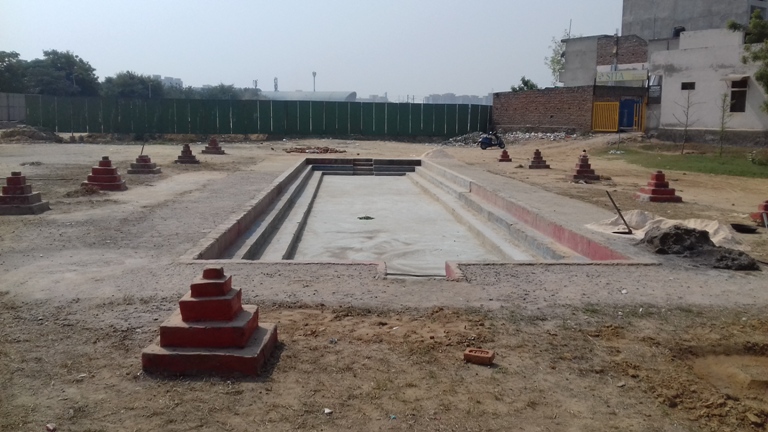
Dwarka ghats readied to host Chhath Puja crowds

Preparations are on full swing for the two-day Chhath puja celebrations at Dwarka’s Chhath Ghat to be held on November 26 and 27.
Authorities are anticipating a bigger rush this year, and have increased the number of ghats in the locality that have been readied.
One of the largest Chhath festival congregations in this part of the city takes place at Sector 11. It is organised by Dwarka Social Religious and Cultural Association. Other major Chhath puja venues are at Sector 8 and Dada Dev Mela Ground, which is organised by Palam Chhath Puja Committee, at Dabri Mor, Bharat Vihar, Kakrola and other places.
All the ghats have been repaired and cleaned. Some new ghats have also been constructed in view of the expectation of a greater rush of devotees this year. What is new this year is that there are some theme based ghats too.
Robin Sharma, president, Dwarka Social Religious and Cultural Association, told City Spidey, “This year, we have four new ghats, and total number has gone up to 20. The number is increasing every year as the popularity is rising." 
All the ghats have changing rooms, toilets, rooms for priests, storing facilities.

Chhath ghat in sector 14

The ghats have been given names of places of historical importance in Bihar, where Chhath Puja is the biggest festival.
There will be an exhibition where Bihar and its culture would be showcased. “This is being done to bring communities together and expose the Delhites to the rich cultural heritage of Bihar,” he said.
At Sector 8 and Dada Dev Mela Ground, preparations are already completed. According to the Puja committee, the ghats will be filled with water tomorrow.
Today, Palam Puja Chhath Committee held a review meeting to take stock of preparations at its ghat at Sector 10. Its president, Amrendra Singh, said, “Today, all the preparations are over. Only decorations and lighting are being done now. Once these are completed tomorrow, water will be filled in.”
At this venue, five new kaccha (temporary) ghats have been prepared. These are in addition to the eight pucca ghats that are already there.
The Delhi government has come out in full support of the Chhath Puja celebrations and has sent enough workers to complete the tasks ahead of time. The municipal corporation from its side has distributed Rs 25,000 to each of the registered Chhath Puja committees.
Inside certain societies, such as Radhika Apartments in Sector 14, the society Chhath Puja committees have made temporary Chhath ghats. In other areas too, such ghats have already been prepared and the committees are busy in arranging other facilities for the devotees.

In Delhi, all will have to pay user fee for waste disposal services

From the next financial year in April, Delhi residents will have to cough up a user fee for waste disposal.
The quantum of the fees will be fixed by the municipal corporation after the Delhi High Court reviews a report submitted by Delhi State Legal Service Authority (DSLA) that was tasked to frame guidelines for the new solid waste management (SWM).


The SWM is expected to start in Delhi from April 2018.
The DSLA report recommends the imposition of a user fee on all waste generating units, which include households, cooperative group housing societies, small shops, eateries, fruit and vegetable vendors, and dwelling units in unauthorised colonies. The DSLA, which has listed out all the waste generating units in its report, has not fixed the quantum of user fee.

“The DSLA was given the task to identify waste generating units and fix the role of different authorities. The committee has prepared the report with the help of government authorities and has submitted it to the High Court. The new SWM rule will come into effect from April 2018. Households and approved colonies will have to ensure that wet and dry waste are segregated at the source level. The High Court will examine our reports and then the MCD will be asked to fix the amount of user charges,” Sanjeev Jain, a member of the DSLA, said.

According to the DSLA report, managing waste generated in unauthorised colonies has proven to be a big challenge for the civic bodies. The committee also identified as major waste generating sources roadside waste by street vendors and a complete lack of on-site waste management in a number of vegetable and fruit markets.

The DSLA also pointed out that even in posh residential colonies, the response for waste segregation programme was poor. But poor infrastructure of municipal bodies was proving to be a hindrance in making the campaign successful.
“To encourage on-source waste segregation, the DSLA has recommended that municipal bodies introduce an incentive-based plan. But the final call has been left to the MCDs,” Jain said.

Thank god air pollution is just 'severe' post Diwali

As expected, there was a sharp rise in Delhi’s air-pollution levels on the morning after Diwali. However, the situation was better than last year, when a blanket of toxic smog engulfed the city, taking air pollution levels to the "emergency category". In comparison, air quality was tagged at "very poor" on Diwali day, and "severe" on Friday evening, a day after Diwali. Ironically, this is the least hazardous situation in the past three years.


Despite this, however, many morning walkers, especially senior citizens, decided to stay away from neighbourhood parks for two days after Diwali to avoid inhaling toxic air. 

VS Rawat, a senior resident of Parivar Apartments in IP Extension, said, “We spend two hours in the morning and two and a half hours in the evening at the neighbourhood park every day. We walk, do some yoga or just chat with friends and neighbours. But given the poor air quality after Diwali, we decided to stay at home for at least two days, hoping things would get better after that.”

AK Pandey, a resident of Vasundhara Enclave, however, felt this year's post-Diwali morning was "much better in comparison to last year". He said, "The Supreme Court's ban on the sale of firecrackers worked. We hope the air quality will get better in a few days.” 
That said, it definitely seems like it has been a cleaner and a less noisy Diwali, if not the pollution-free festival we all hope it will be some day.

Saturday, 21 October 2017

Gurgaon felicitates its deserving Ola cabbies

Most of us depend on cabs for last-mile connectivity — and most of us forget them just as easily. But this time, their contributions were recognised under the initiative ‘Heroes of Ola'. Road safety officers of Gurgaon traffic police were invited to felicitate the drivers for their road discipline and good conduct.

The initiative, which happened recently, has been carried out in other cities as well, including Mumbai, Bengaluru, Chennai, Kolkata, Pune, and Hyderabad.
Customer feedback — through emails, in-app reviews, Facebook and other social media platforms — has played an important role in judging the performances.
The initiative, officials believe, will provide an impetus to drivers to improve their performance further, and thus, provide safe commuting options for residents.
Speaking to City Spidey, Hira Singh, ACP (Highway), Gurgaon traffic police, said, “At a time when we are surrounded with shocking news on almost regular basis, initiatives such as these will serve as a constant reminder of the goodness and kindness that still exists.”
 The initiative will be conducted every month.
“We travel a lot by cabs, and hence, for us to have confidence in their service and conduct is of utmost importance,” said Ashish Nath, a resident of South City I.
Nitesh Prakash, senior director at Ola Cabs, said, “Customers write in through various channels, and with this, we want to encourage a culture of impeccable service among our 9,00,000 driver partners  — and share their inspiring stories with the entire world.”
Driver partner Vinod Kumar, also a Hero of Ola, said, “As a driver partner, I strongly believe that I am responsible for the safety of my customers. It feels great to be recognised.”

Gurgaon: Better roads as Diwali gift...

To usher in Diwali, different parts of Gurgaon are witnessing road carpeting.  Rajiv Chowk and South City II were the first ones to witness the makeover.

Haryana Day is on November 1 and celebrations will be held at Tau Devi Lal Stadium. The road on this stretch, known as Bakhtawar Chowk, has huge potholes and is broken at various places. The authorities have now taken the initiative to repair the badly damaged one-kilometre stretch.
The roads of South City II were the next focus.
At a recent meeting with concillors, Rao Narbir Singh, Haryana public works department minister, had assured residents of speedy action and granted Rs 4 lakh for repair work from his MLA funds.
The five-year-old wait for residents finally came to an end.
“We will start work as soon as receive the orders. Cost assessment has already been done by us,” confirmed Gaurav Antil, joint commissioner, Municipal Corporation of Gurgaon.
“We are happy that at least the worst road of our area will finally be repaired,” said Nilesh Tandon, President RWA Fresco.

Dwarka: Parks to flash numbers of area police at the gates

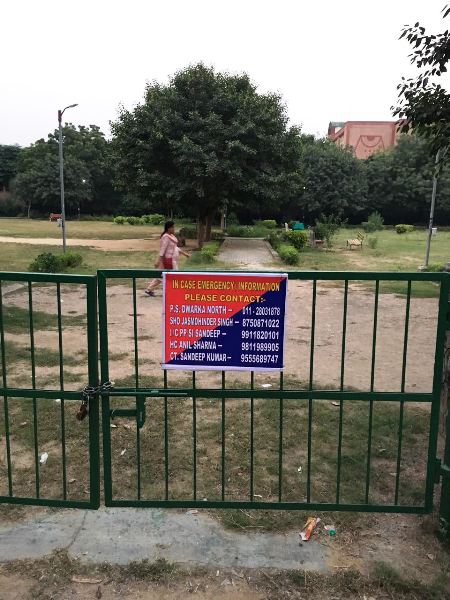
To augment safety measures in Dwarka, the police has put up boards with numbers of the area police officials at the gates of several parks across the sub-city.
According to Dwarka ACP Rajendra Singh, the initiative is a first of its kind — and is a way to connect with people more directly.
In talks with City Spidey, he said, “There was a demand from the community to flash the numbers of the local police personnel. In meetings with RWAs and residents, we gathered that the residents wanted the numbers of the beat constable, the sub-inspector and the area SHO. So, we have provided them the numbers. Now, anyone can call them directly in case of any problem.”
RWAs and social organisations have, of course, welcomed the initiative.

The numbers of local police displayed at the gates 

President of FORWAS (Federation of RWAs Sector 9) and president of Ganpati Apartments in Sector 9, Advocate KS Bhati, said, “This is the first time that a step like this has been taken in the sub-city, and we are really happy. Now, senior citizens and the women can feel a bit more safe visiting parks. I think such boards must be put in other public spaces, too.”
Dwarka has more than 300 parks — 168 are under the municipal corporation and the rest under the DDA.
Residents feel such boards must come up in all parks — and must be placed at points that are easily visible.
Maya Kaushal, a resident of Sector 22, and a member of #Safe Dwarka, said, “I use the park of Sector 22 behind the mall. But I haven’t noticed the board at the gate. But I will take a closer look next time I go. The initiative is good, but people must be made aware of the initiative. People must know that there is a board with numbers. Also, it should have some kind of lighting, so people can make out the numbers even in the dark.”

Think you are safe with the firecracker ban? The Ghazipur landfill is burning

Dumped waste is a worse health hazard than many of us realise. Not only does it release easily flammable, toxic gases such as methane, its burning can also lead to worse air pollution than lighting firecrackers.

And this is why the Ghazipur landfill is a danger far worse than government officials realise. The recent fire at the landfill has increased pollution levels tenfold in Anand Vihar and surrounding areas.
Last Sunday, air pollution in East Delhi was recorded at 1,150 microgram per cubic metre; last year around Diwali, the same was recorded at 1,131 microgram per cubic metre, owing to firecrackers. The negligible difference is for all to see.
Officials also blamed the release of toxic gases from rotting waste. “Air pollution from dumped waste may be just 4 per cent to 5 per cent, but chemical reactions lead to the production of methane, increasing the possibility of the waste catching fire. The smoke is a worse pollutant than firecrackers,” officials said.
According to Delhi Pollution Control Committee, or DPCC, these toxic gases can drastically reduce the quality of life for people living nearby.
The only solution is to shift the dumpyard elsewhere. But do the authorities have an alternative site?
No.
Neither EDMC, nor Environment Pollution Control Authority (EPCA) has any viable option in mind. When asked what EPCA’s plans are, Sunita Narain, a green activist and EPCA member, said, “It has now become a political issue and we do not want to fan it. But EPCA had suggested way back in 2002 that this indiscriminate dumping of waste at the Ghazipur landfill should be stopped.”

ATS Advantage: From crackers to creativity

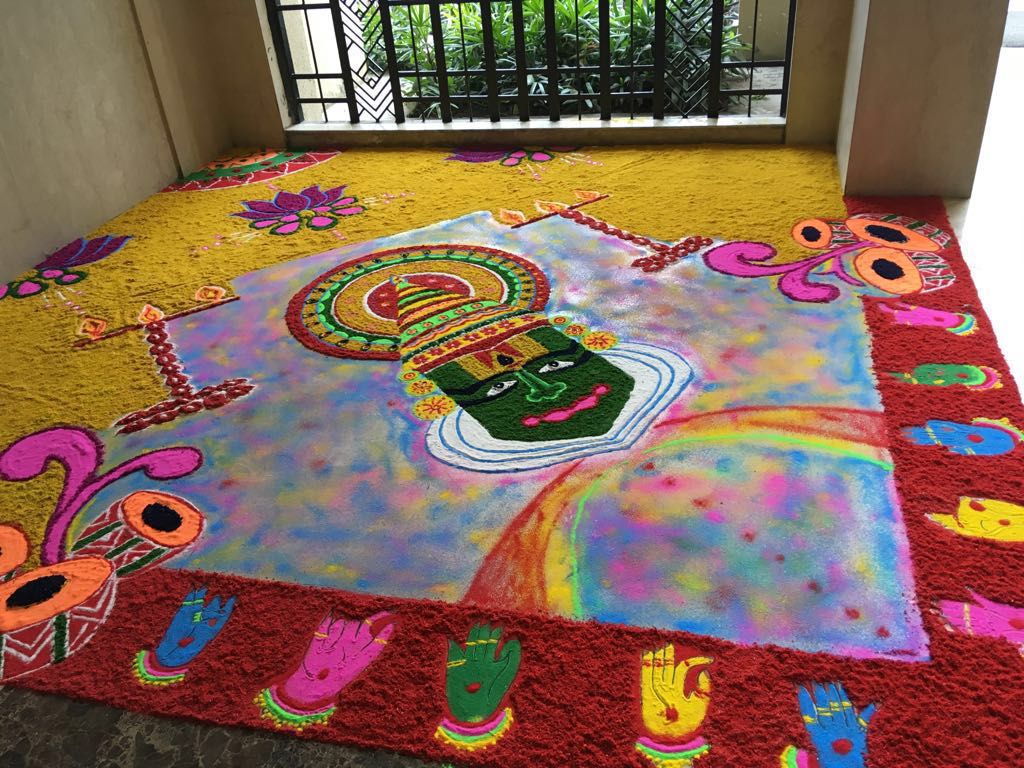
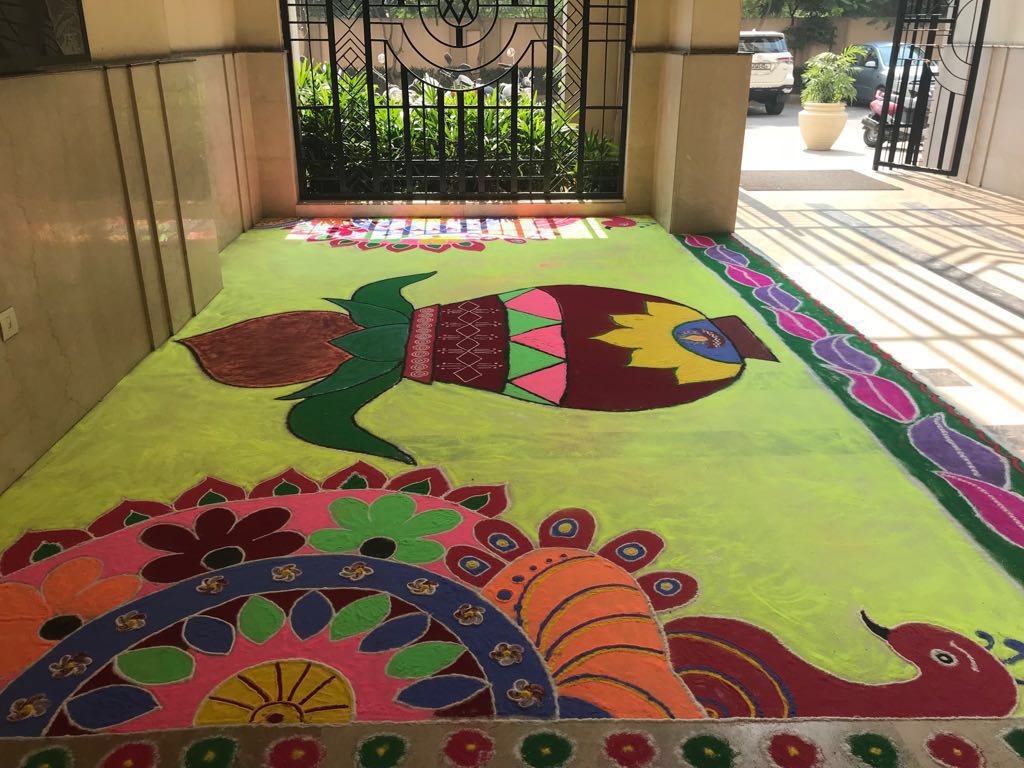
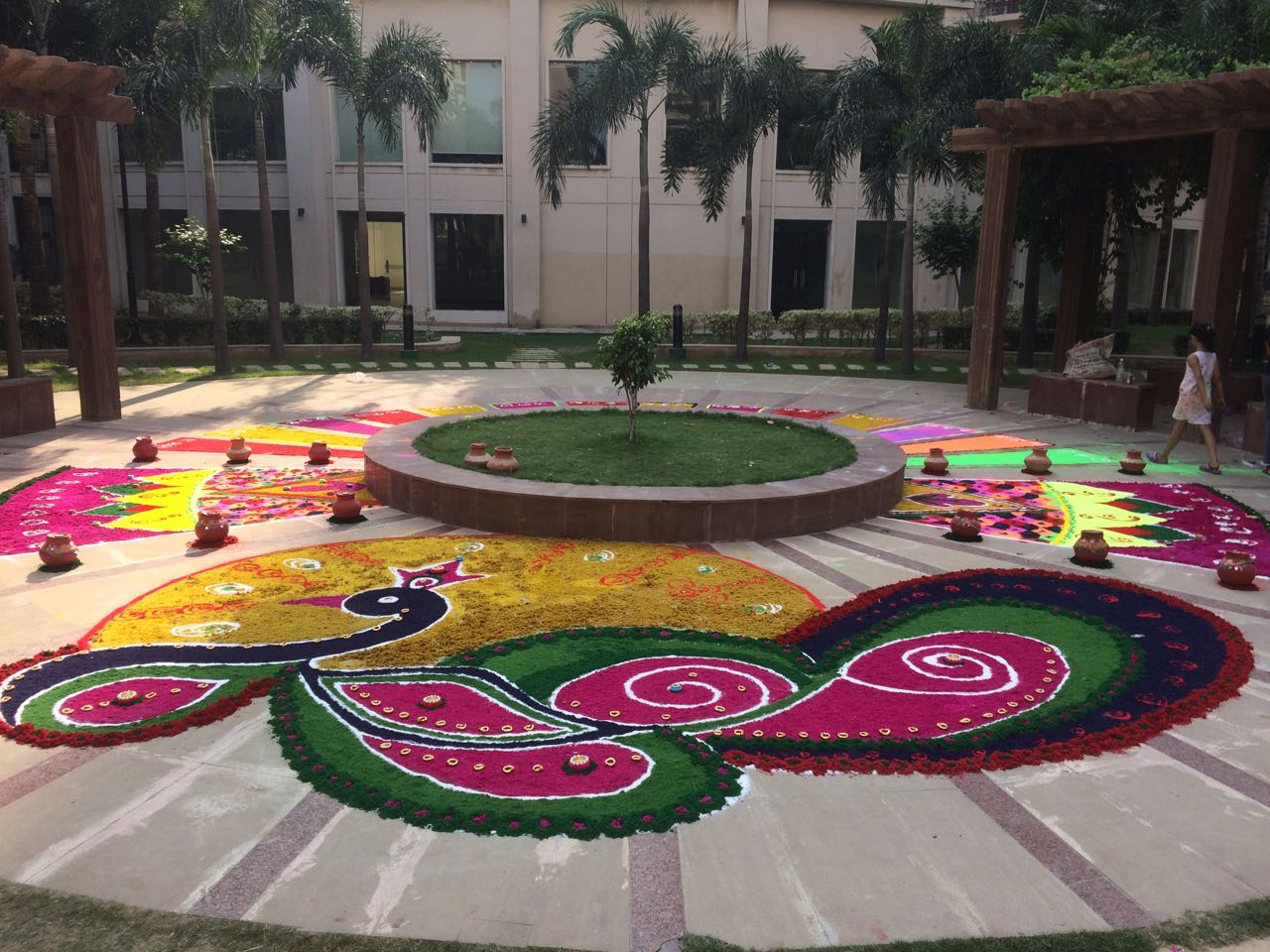
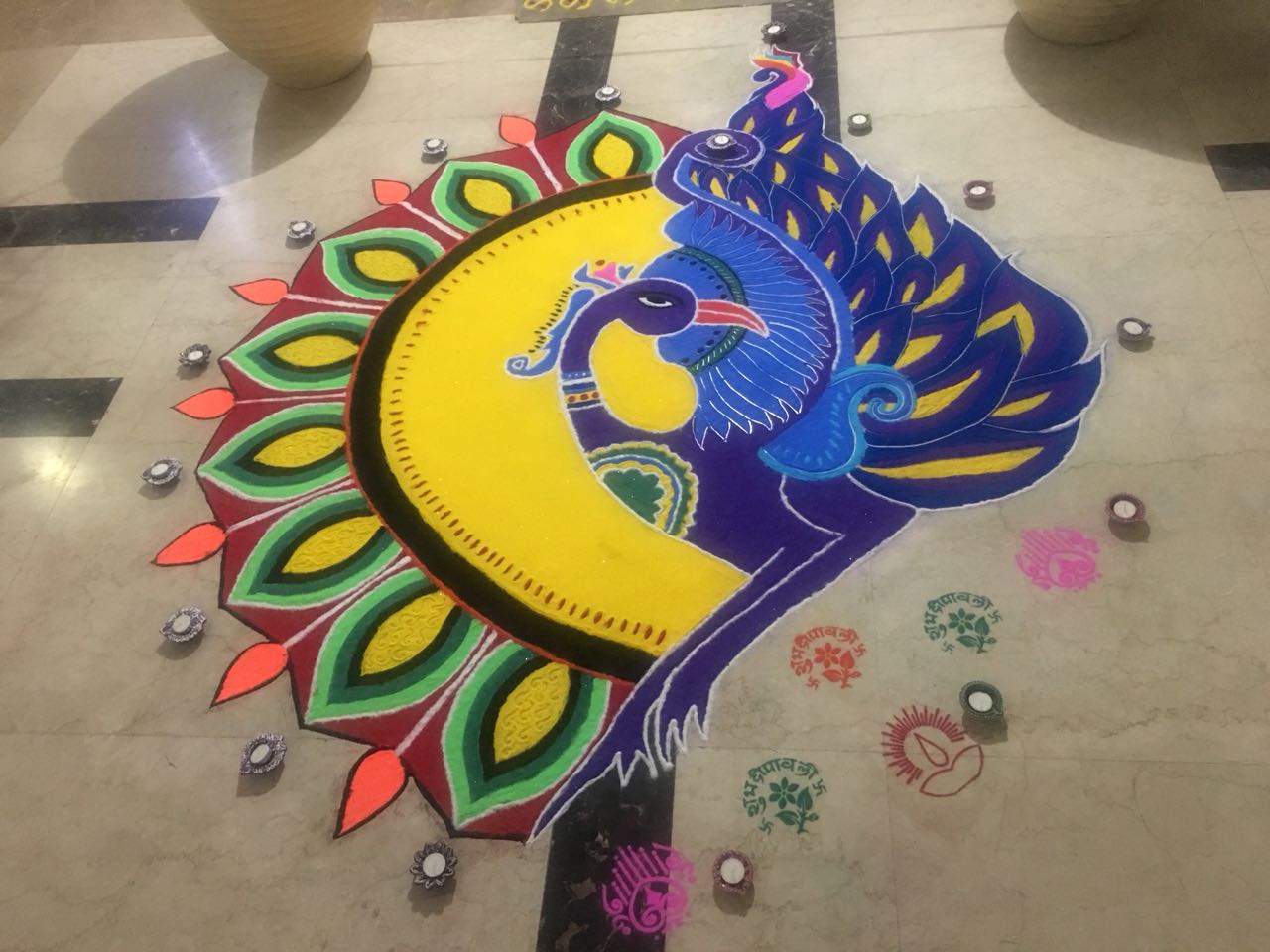
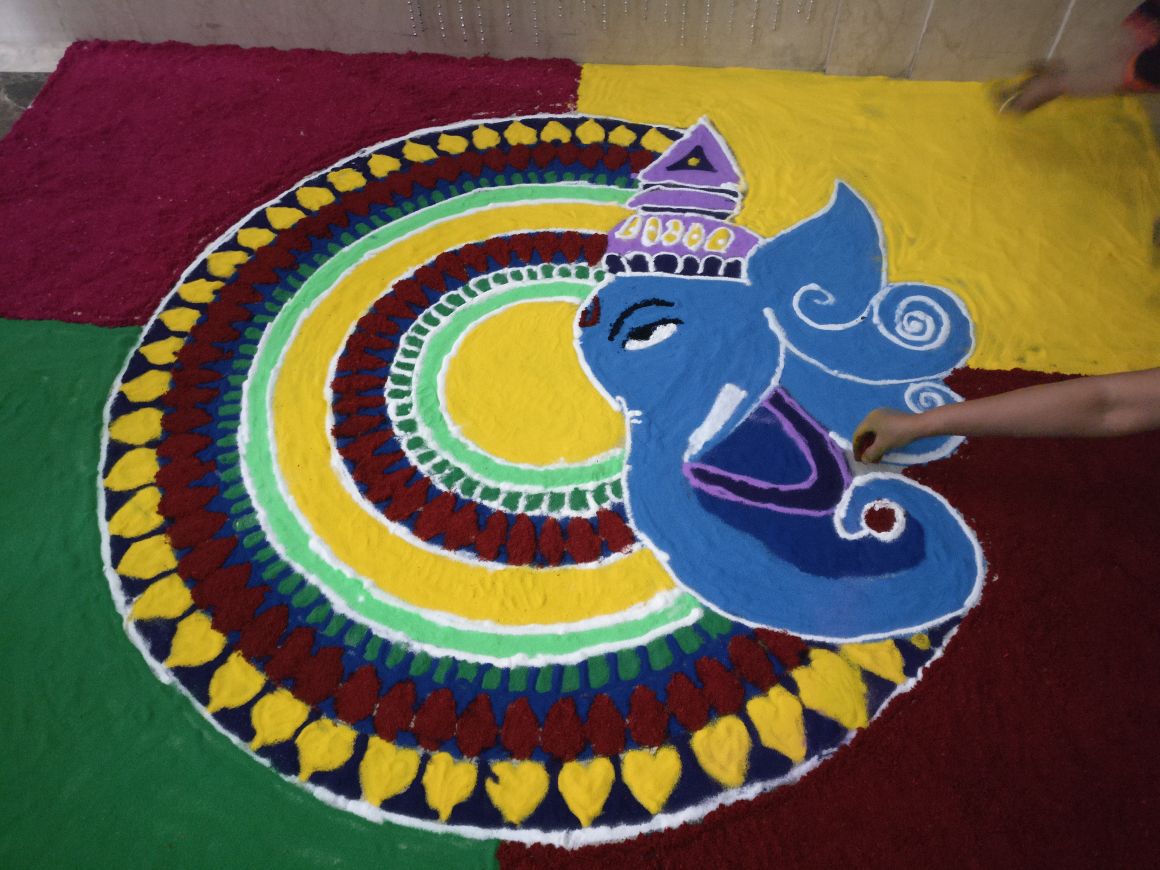
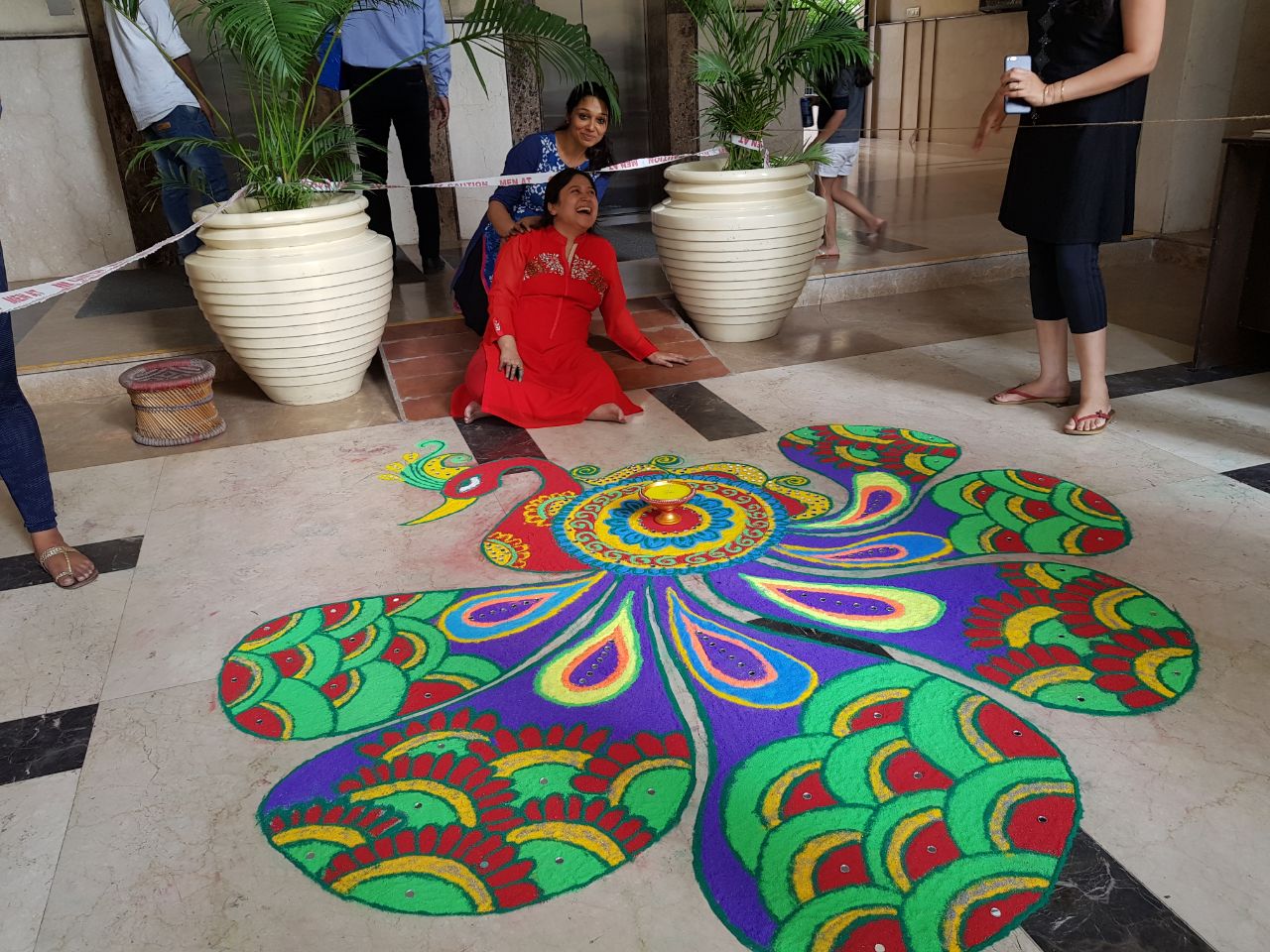
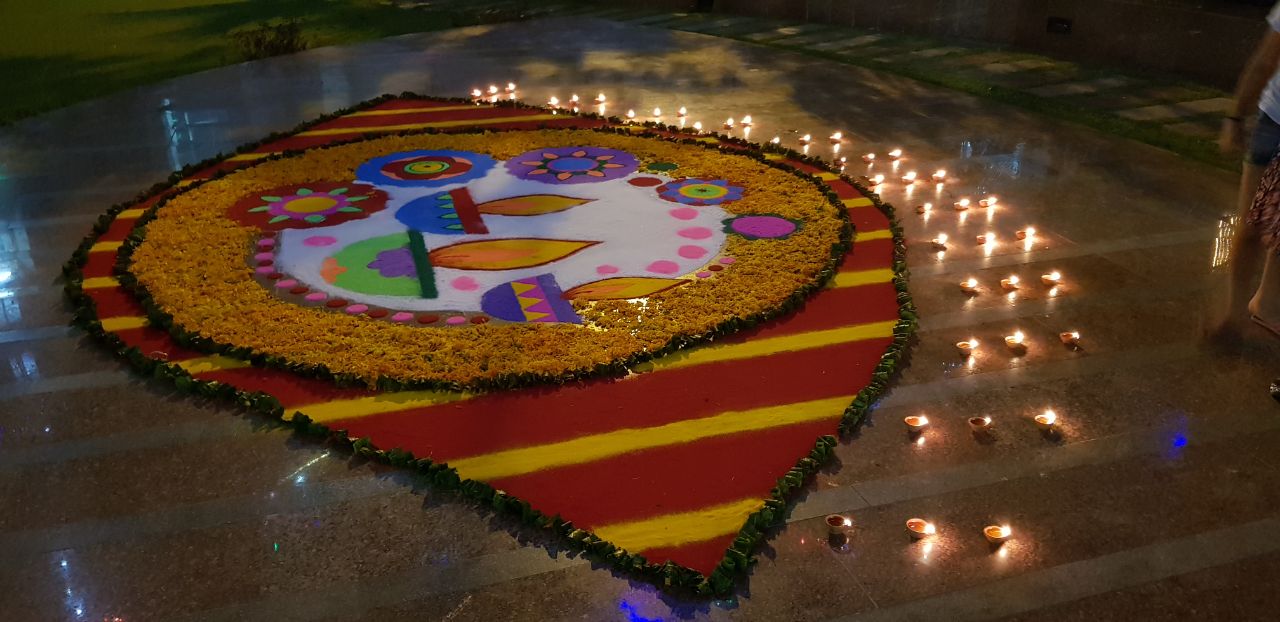
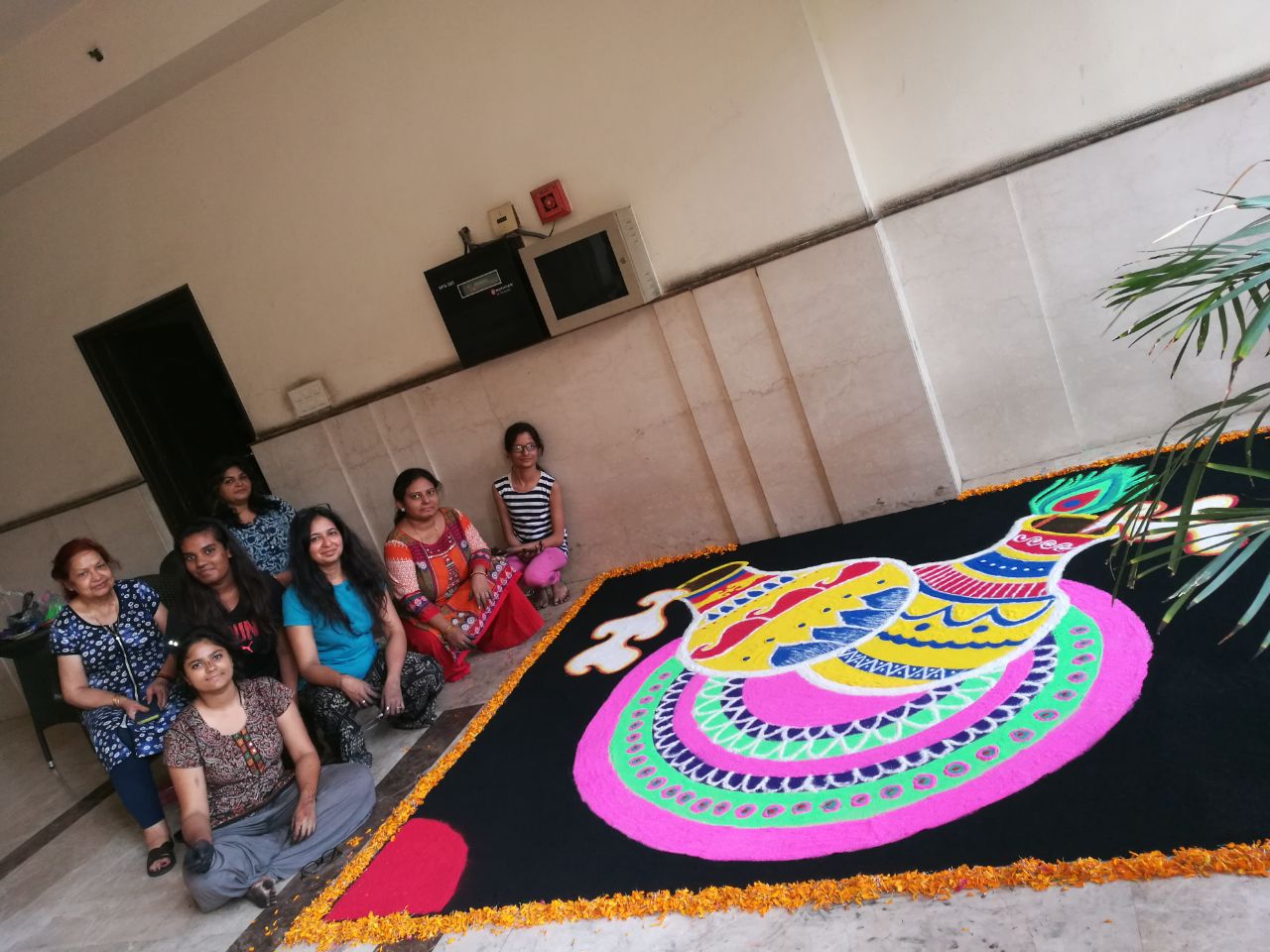
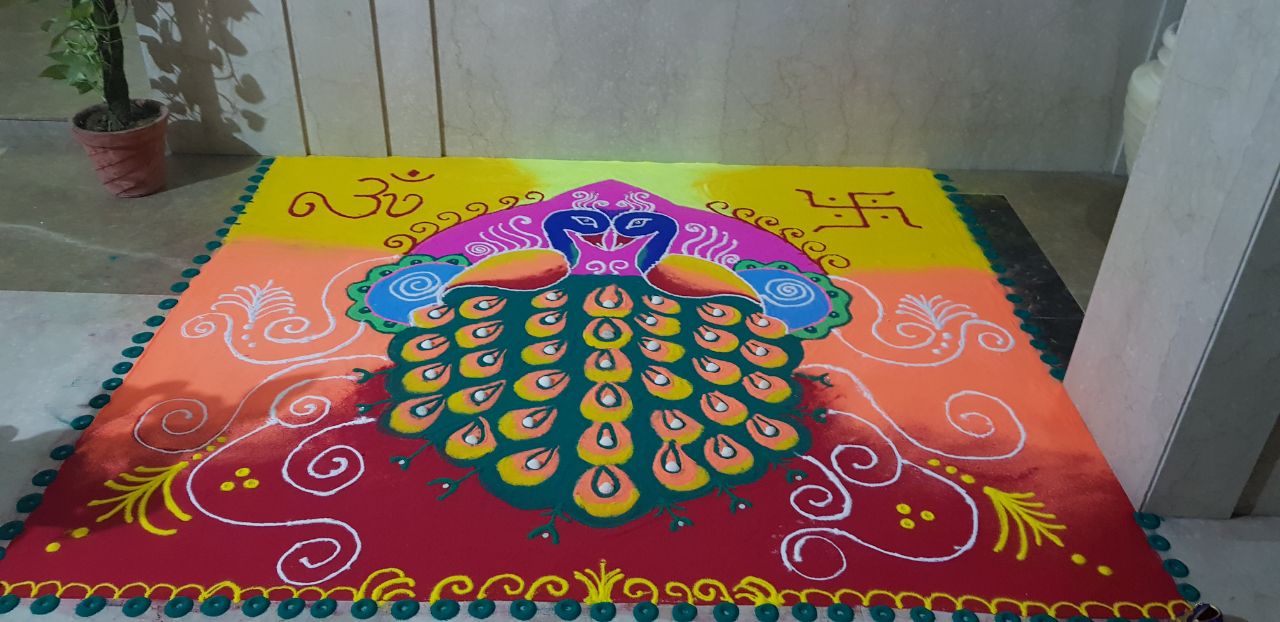
What once used to turn into a graveyard of burst crackers, ashes and singed grass after Diwali, today sits pretty with colourful rangolis instead. We are talking about the amphitheatre, lawns and common areas of ATS Advantage in Indirapuram. The society, in a “Say No To Crackers” initiative, decided to turn its firecracker playgrounds into a pretty deterrent for the very same activity.
The result?


This, and a society devoid of potentially hazardous smoke.
Speaking to City Spidey, Usha Singh, an RWA member, said that the rangolis had been created by the joint participation of residents. “We are hoping it will deter residents from bursting crackers in the areas,” she added.
Anika Aren, a resident who was part of the rangoli creation, said they had also proposed a deepotsav, in which every family in the society could light a diya in the area and celebrate a happy and safe Diwali.
The society had organised a special rangoli and photography contest as well.
Anjula Negi, convenor of the event, said that residents from all 21 towers participated in the rangoli contest. “We have placed rangolis in various common areas of the society to dissuade residents from bursting crackers. It is all for the sake of health and general wellbeing. We will further decorate the pathways of the society with diyas and flowers,” she added.
Kudos, ATS Advantage!

It's a cracker of a Diwali without crackers!

While the ban on sale of crackers may have disappointed many, the corporate sector has wholeheartedly welcomed the move.

Ola Cabs with its ‘#BigFestivalSmallStep’ pledged to help in bringing down the pollution levels in the city. They also launched the third film in the series #FarakPadtaHai, based on pollution and traffic congestion.
ShepHertz Technologies, a Gurgaon-based start-up, initiated a social media campaign called “My Eco-Friendly Diwali”, advising people not to buy crackers.
“We aim to bring down pollution levels, and hence, our celebrations were limited to sumptuous food, rangolis, and a sound-and-light show,” said Brig. Manoranjan Singh, head of functional operations, ShepHertz
Most companies distributed sweets, organised rangoli competitions and gave away best-dressed titles.

How about quirky crochet toys this Diwali?

How about crochet toys for Diwali gifts? Creative, isn’t it? If you are looking to purchase something different at Diwali melas, you will certainly find the work of Hina Kamani and Camy Kamani interesting.

They have been selling these toys at the Garden Estate Diwali mela in Sector 25, Gurgaon — a first for them as well. 
This mother-daughter duo has inspired other women to join them as well, and together they founded a group, Krafty Threads, in April this year.
While mother Hina has been crocheting for years, Camy felt inspired by her mother and grandmother, Nila Doshi.
Though a passion, the platform has also provided a means of economic empowerment for the women involved.
Member Roochy Pandya, a tutor by profession, says, “I work with children, so my passion for crochet is an extension of that work. And I really enjoy doing them. It has given us a new sense of identity.”
Freelance editor and member Jayashree, who uses only her first name, loves gifting these creations to children. She says, “I love making them and they make for great gift items.”
One of the group members, Uma Patki, is a grandmother and she is enthusiastic about learning and mastering crocheting techniques.
Doshi, also a member, shares, "Crocheting and crafts have been twin passions for close to 50 years now. Using my creative skills to emancipate women is a source of great joy."
The group's mentor, Ritu Raina, has helped Krafty Threads to establish market links, giving this all-women enterprise a face. She worked with them to develop a collection and has provided their first-ever commercial platform. The team sold toys worth Rs 35,000 at the Garden Estate mela. 
This group also supports a cracker-free Diwali.

Kudos, Gurgaon, for sticking to a no-cracker Diwali

It seems the Supreme Court ban on firecrackers really worked in Gurgaon. The city witnessed a relatively peaceful Diwali, with a drastic dip in the number of crackers burnt and air quality better than other years.

Speaking to City Spidey, Raj Kumar Yadav, president of the Sector 46 RWA, said, “Residents of the sector refrained from bursting crackers; we hardly had anyone burning them. We are happy that our no-cracker campaign helped create awareness about the polluting effects of cracker bursting.”
The areas found to be most peaceful were South City I and II, Sohna Road, sectors 14 and 17, and DLF Phase 1 and 2.
DK Yadav, president of the Sector 17B RWA, said, “We had very few houses engaged in burning firecrackers. So overall the scene was pretty quiet. However, this time the stress was on decoration of houses more than crackers.”
It seems it really was a healthy Diwali in Gurgaon, with lesser air and noise pollution this year.  

Ggn: This one initiative can shape the future of so many underprivileged kids

In an attempt to give underprivileged students access to books they may not otherwise be able to read, Sangeeta and Lalit Yadav, residents of Malibu Towne and founders of Learn to Serve Foundation, recently started a library for children from Class I to Class XII at Shivaji Park, Khandsa, in Gurgaon.

The chief guests at the inauguration were Raghuvendra Bhatt, acharya of Shringri Peeth Veda Pathshala, Sheetla Mata Mandir, Gurgaon; Ashok Diwakar, vice-chancellor of Starex University; Sukhbir Chauhan, member of Haryana Jal Sunrakshan Samiti; and educationists Sanjay Verma and Mehram Yadav. The inauguration was also attended by Sunita Yadav, newly elected councillor of Ward 22.
Spread across 300 square yards and currently home to 2,000 books, the library aims to fill the gaps in the kids’ education. There is also a teacher available to guide the children who come in to study and make notes.
Speaking to City Spidey, Sangeeta Yadav said, “It is an investment that pays precious interest. The idea is to sow the seeds of education early in these children’s lives.”
She added, “We also really thank all those guests and residents who invested their valuable time lending a helping hand for this library to be set up. Thousands of students’ futures can be shaped by this one objective.”